
If walls could talk, what would they say? we may wonder. In Brownsville, the second city in Texas after San Antonio with the most historically significant structures, walls have many stories to share. There is just one problem, not everybody is trained to listen. Restoring historical buildings requires many talents, and it is getting harder to find skilled workforce in the Valley.
Lawrence V. Lof, biology professor emeritus at UTRGV, is an avid preservationist who has rehabilitated several historic buildings in the lower Rio Grande Valley. “You never know what you might find in these buildings. You become like a detective and sometimes one sentence in a book will give you all the information you needed. You just have to follow the threads,” Lof said.
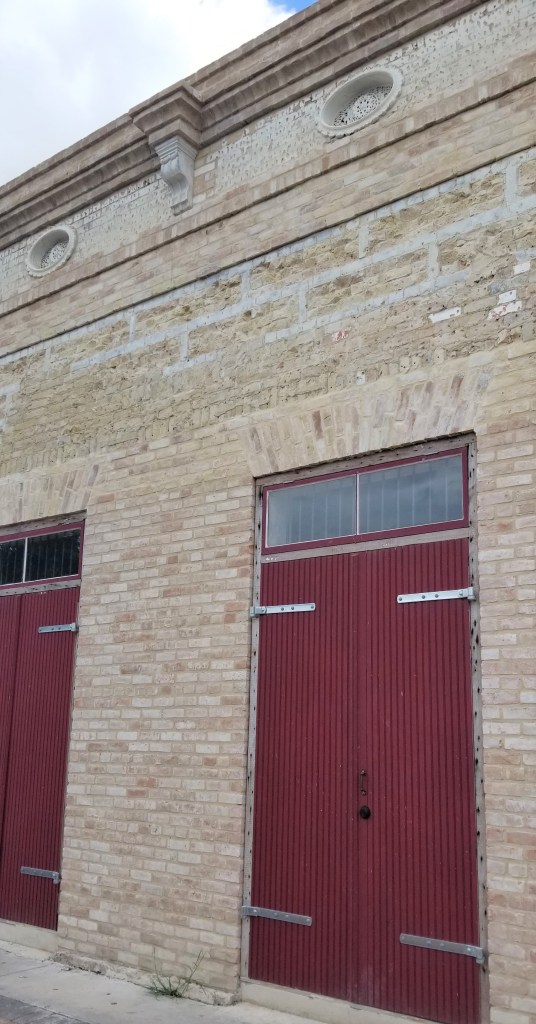
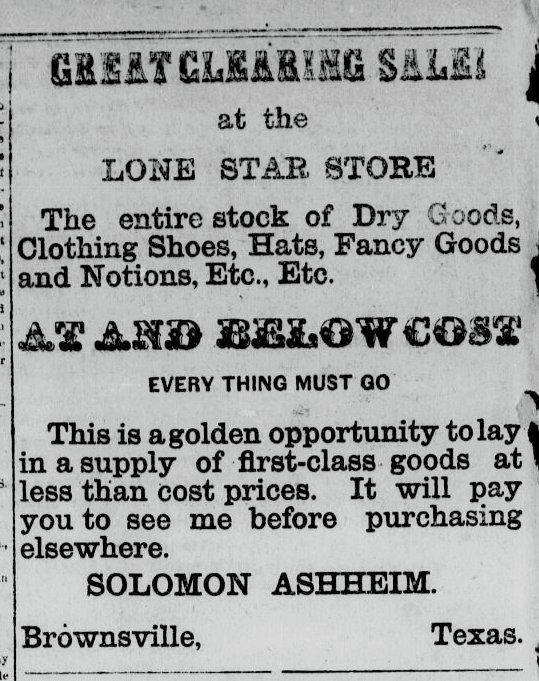
We met him at his current project, the Ashheim building located at 1242 East Washington Street in downtown Brownsville where he gave us a tour of the property. Solomon Ashheim was born in Wongrowitz, Posen, Germany in 1832. Him and his wife Paulene Hollander migrated to New Orleans in 1860 seeking religious freedom. They were part of a wave of Jewish immigrants to Brownsville in the mid-1860s and until the end of the 19th century.
Lof’s research found that before Ashheim built his business and home at this location, he evicted tenants that were living at an existing wood-frame house. An amazing discovery was that one of those tenants was the future president of Mexico Porfirio Diaz who was hiding in Brownsville planning a coup and seeking American support in exchange for concessions to coastal properties.
The design of the Ashheim building was common in Brownsville as it was in Charleston, Savannah, and New Orleans. These cities were tied by the coastal trade so what was popular there, was popular here. It was designed in the local Border Brick Style by an early architect in Brownsville named Brooks. The house consisted of a narrow building on one side with an open courtyard on the other, and always the commercial section in front and residence in the back.
In 1865, Ashheim established the Star; a clothing store selling dry goods, boots, shoes, and furnishings. He served several terms as Cameron County Treasurer and along with other Jewish merchants, founded the city’s commercial downtown.
Brownsville was a boom town during the Mexican – American War and the Civil War. The Rio Grande was the lifeline of the Confederacy and Brownsville was its backdoor. After the Civil War, the city fell into hard times. In the 1880s, the city was at the dawn of an agricultural boom.
In 1880, another wood-frame, one-story building housing a coffee shop owned by Swiss immigrant Gabriel Catcell was demolished. The new owner, Jose Fernandez, bought the 50 ft x 50 ft lot across from Market Square; the oldest continually occupied municipal building in Texas. The lot has two public facades: one facing Market Square and the other Washington Street.
Jose Fernandez was born in Spain and owned coffee plantations in Veracruz, Mexico. He visited Brownsville often. The house he built in 1882 was a fine two-story structure designed with the traditional Border Brick Style and a New Orleans flare. The house has an atrium with a cistern; one of only two of its kind in Brownsville. It also has a basement, an unusual feature in a home on a river delta. Time took its toll on the Fernandez building, but enough architectural features survived to guide Lof to completely restore it in 2016. The Olvera family operated a shoe repair shop for over 70 years in this building hence the name Fernandez Olvera Building. “I look for clues in hidden places; this is how I find wall colors, wallpaper, wood trims and more. The owner has to be there during the gutting of the place or things will be thrown away and lost forever,” Lof said.
The heavy traffic, noise, and even animal slaughter happening at Market Square, deterred a sophisticated Fernandez from living in this house. According to historic records, the house became a hotel before leasing it to a family member.
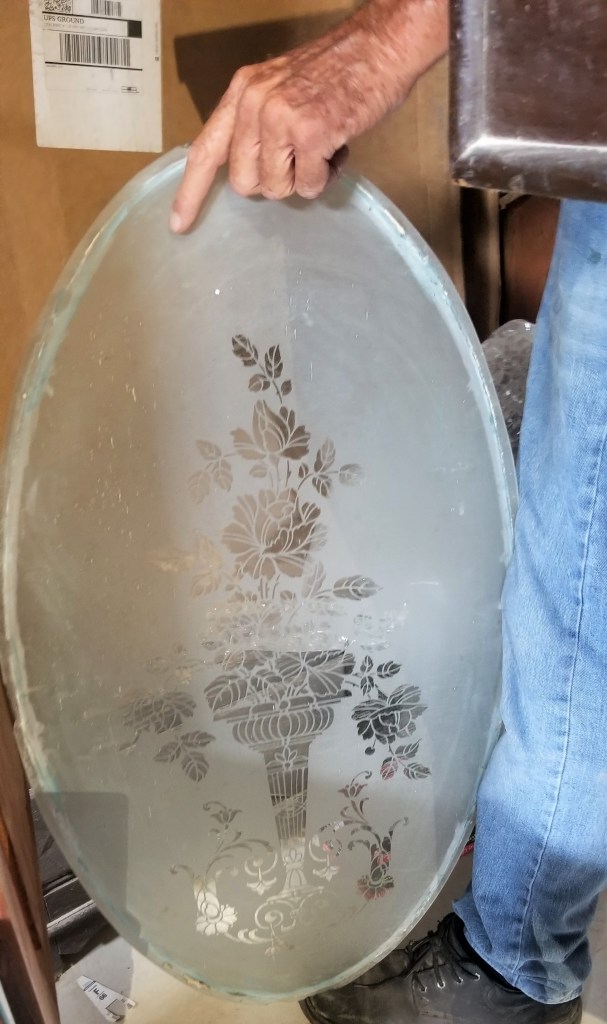
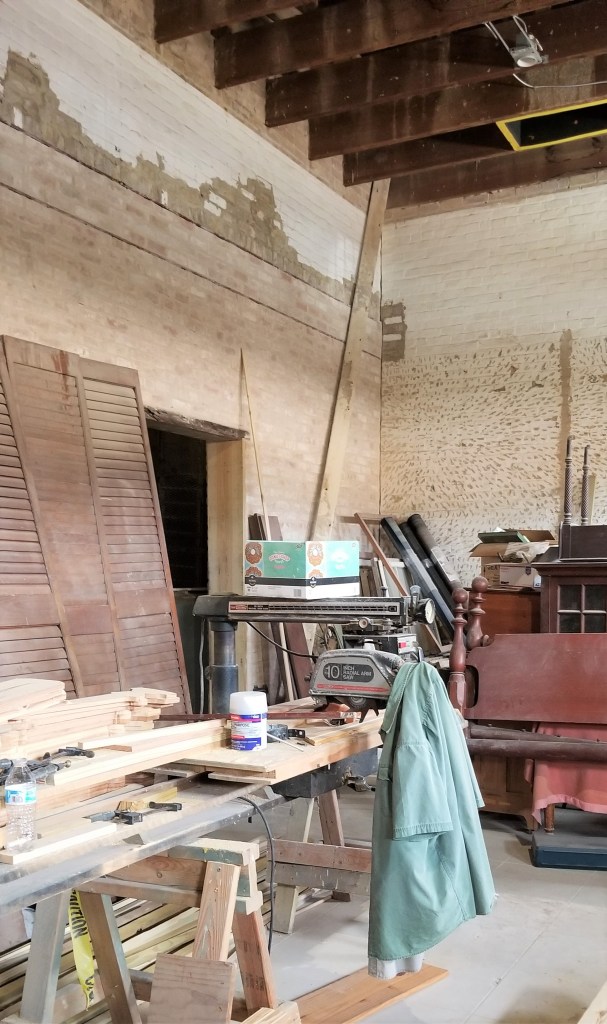
Lof cannot do it all, so he works with a contractor who shares employees when they are not busy. Lof has trained many of these workers to reproduce or restore old doors and windows. “For the Fernandez Olvera house we had to make 96 doors from scratch!” he said.
“Losing the knowledge of how to restore is the critical part. It would be a real problem in the future if we must bring skilled labor from outside the Valley. Too costly, and few would afford it resulting in the loss of important buildings,” Lof said. Building codes can be expensive and following them would not deliver a historic building, but a new building. Lof uses and reuses old material from old buildings, for the real cost of restoration is in the labor. Buying cheap material is a tremendous waste of resources.
Before the pandemic, Lof produced a plan for a historic preservation practicum for students in Texas Southmost College’s Industrial Technology Department. “Everything was going well, and funding was secured but the pandemic changed it all. Now it is just a matter of deciding. It is all planned and ready to go. The future of Brownsville is in its past.” He concluded.



 NydiaO